
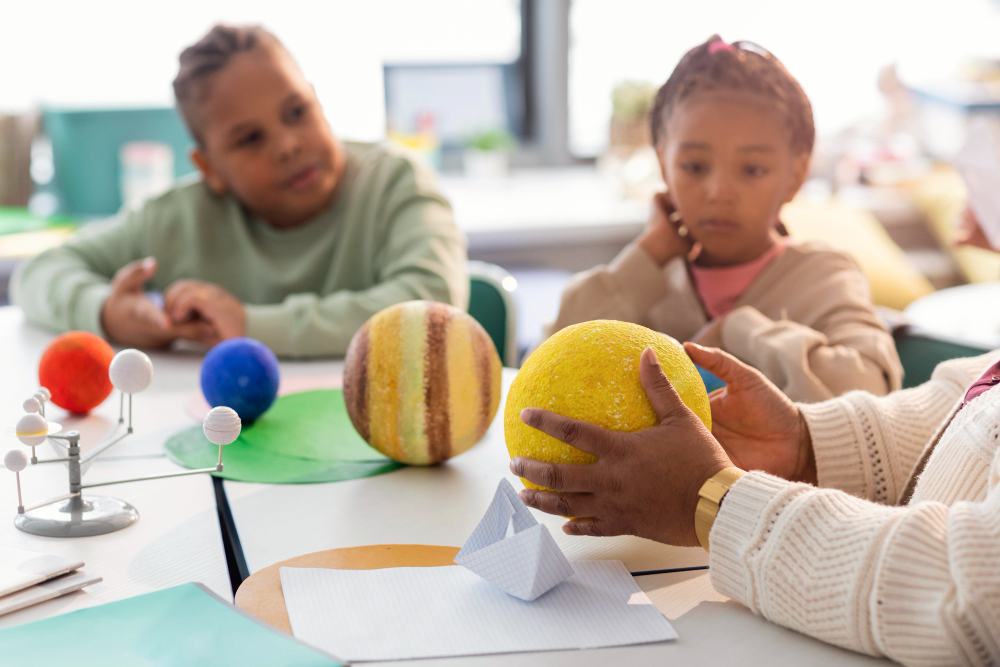
The 21st-century learner faces a world vastly different from the one previous generations knew. Preparing children for this digital and dynamic environment requires a balance of timeless teaching principles and modern innovations. Integrating technology with experiential learning helps children develop the skills, confidence, and adaptability needed to navigate complex challenges.
Studies show that blending hands-on learning with age-appropriate digital tools improves engagement, retention, and cognitive development. Interactive apps, educational games, and guided technology activities can complement traditional methods, offering children opportunities to explore concepts in new, engaging ways. Beyond knowledge acquisition, technology encourages problem-solving, creativity, and independent thinking.
Equally important is fostering adaptability and resilience. When children engage in exploratory projects, whether building a model, conducting a small experiment, or collaborating on a digital task, they learn to approach challenges with curiosity rather than fear. These experiences teach initiative, teamwork, and innovation, essential traits for leaders of tomorrow.
Parents can support these efforts at home by encouraging curiosity-driven exploration, allowing children to experiment safely with educational technology, and discussing lessons learned together. By combining the best of traditional learning with modern tools, children not only absorb knowledge but also develop the mindset and skills required to succeed in a fast-evolving world.